1. Slow Lead Response
Generating leads is only the beginning of the sales process.
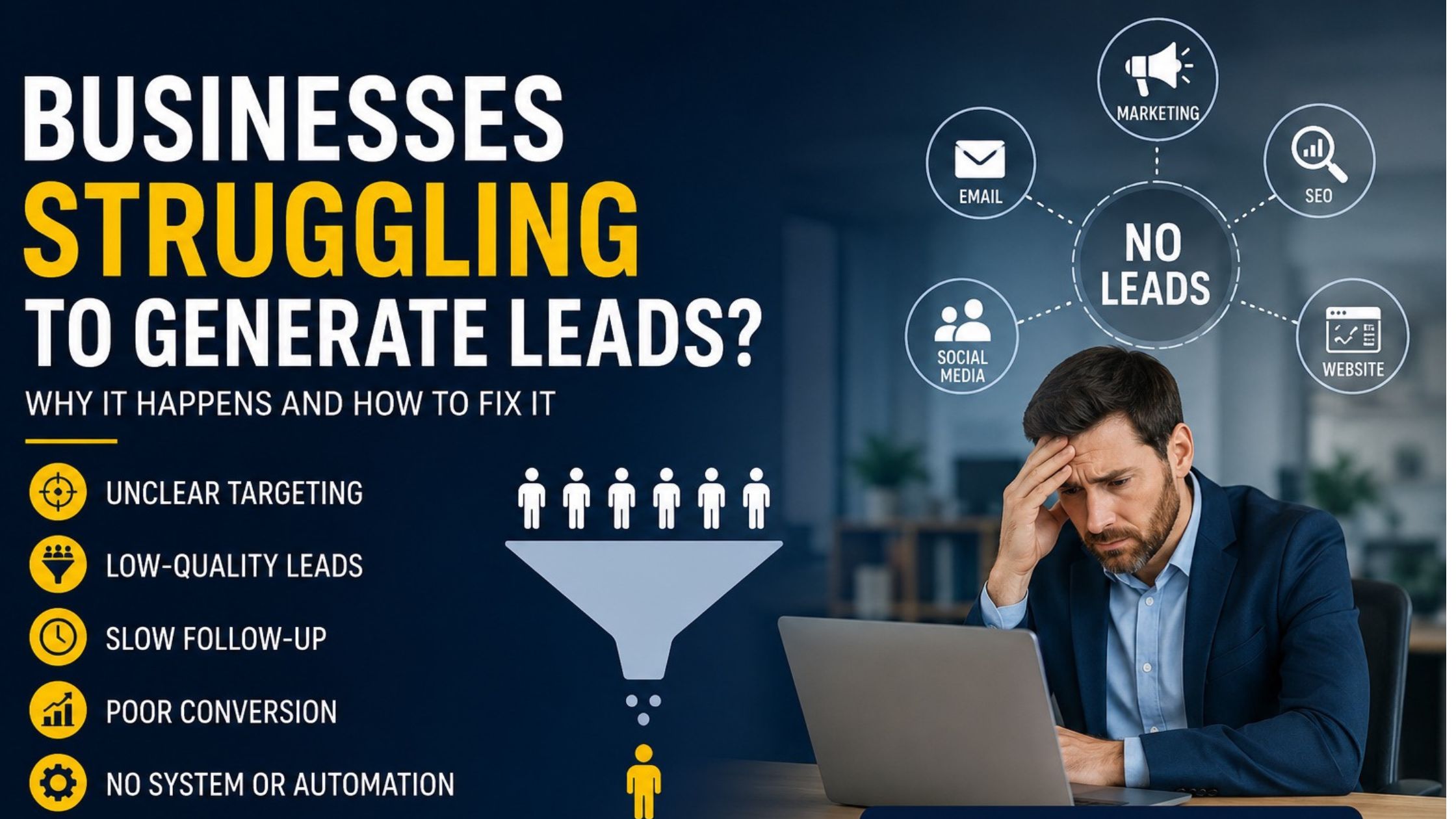
Many businesses invest heavily in marketing and lead generation but still struggle to turn enquiries into paying customers. If you are asking “why are my leads not converting?”, the problem may not be the number of leads you generate. It may be what happens after those leads enter your business.
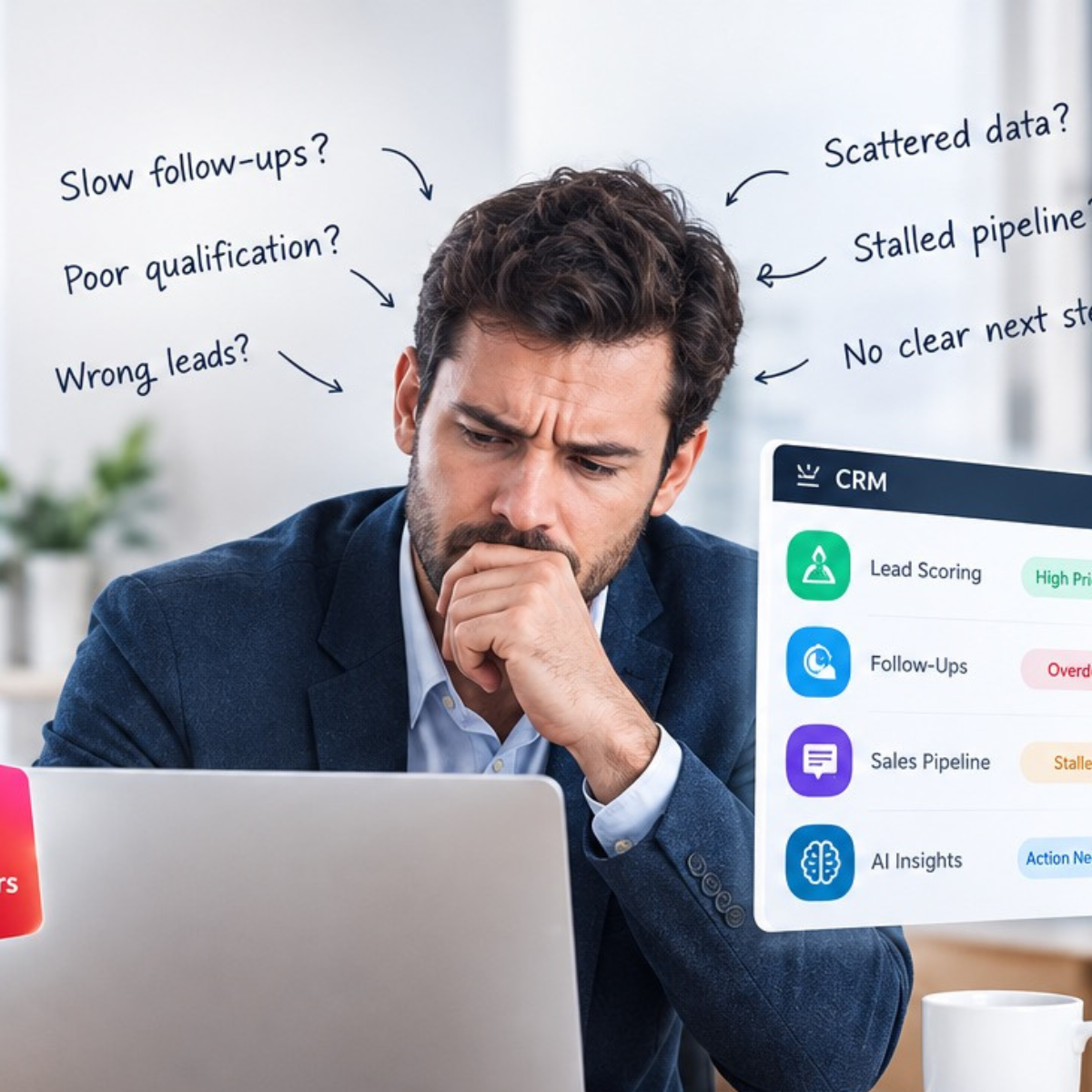
Common problems include slow responses, missed sales follow-ups, poor lead qualification, scattered customer information and sales teams not knowing which opportunities to prioritise.
The good news is that these problems can be addressed with a structured lead management and sales process.
1. Slow Lead Response
One of the biggest reasons sales leads are not converting is slow response time.
A prospect who makes an enquiry is showing some level of interest. If your business takes too long to respond, that prospect may lose interest or contact a competitor.
Every lead should have a clear owner, response process and next action.
A CRM can help sales teams track new enquiries, assign leads and create follow-up tasks so opportunities don't disappear.
2. Poor Lead Qualification
Not every lead is ready to buy.
Some prospects are actively looking for a solution, while others are only researching. Some may not even be a good fit for your business.
Effective lead qualification helps sales teams understand factors such as:
- Business needs
- Industry
- Company size
- Current solution
- Decision maker
- Purchase timeline
- Expected outcome
- Potential deal value
Better qualification allows salespeople to spend more time on the opportunities most likely to convert.
3. Missed Sales Follow-Ups
A lead may show interest but still fail to become a customer because nobody follows up consistently.
A salesperson may make one call, send one email and then move on to the next lead.
This creates a hidden source of lost revenue.
A strong follow-up process should include scheduled calls, emails, tasks, reminders and clear ownership.
The question businesses should ask is:
How much revenue is hiding inside your overdue follow-ups?
4. You're Treating Every Lead the Same
A list of 100 leads does not mean you have 100 equal sales opportunities.
Some leads may have strong buying signals. Others may have very little engagement.
This is where lead scoring can help.
Businesses can use factors such as engagement, activity, company information and buying behaviour to prioritise prospects.
AI-powered lead scoring can go further by helping sales teams identify patterns and determine which leads deserve attention first.
The goal isn't simply to generate more leads.
It's to focus on the right leads at the right time.
5. Your Customer Data Is Scattered
Customer information is often spread across multiple systems:
Email → conversations
WhatsApp → messages
Spreadsheet → leads
Calendar → meetings
CRM → opportunities
When information is disconnected, salespeople may not have a complete view of the customer.
They may not know when the last conversation happened, what the prospect needs or when the next follow-up is due.
A connected CRM gives sales teams a more complete customer view and helps reduce information gaps.
6. Your Sales Pipeline Contains Stalled Deals
A pipeline can look impressive while producing disappointing revenue.
For example, a business may have £1 million worth of opportunities but very few deals actually moving forward.
A healthy sales pipeline should show:
- Current opportunity stage
- Deal value
- Expected close date
- Owner
- Recent activity
- Next follow-up
- Potential risks
Identifying stalled opportunities early allows sales teams to take action before the deal is lost.
7. Your Sales Team Doesn't Know What to Do Next
Businesses often have plenty of data but still struggle with one simple question:
“What should we focus on today?”
A modern CRM should do more than store contacts and sales records.
It should help teams identify:
- Which lead needs attention
- Which follow-up is overdue
- Which opportunity is at risk
- Which prospect is showing buying signals
- What action should happen next
This is where AI sales intelligence can turn CRM data into practical sales actions.
8. Marketing and Sales Are Not Connected
Marketing may generate hundreds of leads, while sales may complain that the leads aren't converting.
The problem can be a lack of alignment.
Marketing needs visibility into what happens after lead generation, while sales needs to understand where leads came from and what interactions have already taken place.
Connecting marketing and sales data helps businesses track the complete journey:
Lead → Qualified Lead → Opportunity → Customer → Revenue
This makes it easier to identify which activities actually contribute to sales.
How to Improve Lead Conversion
If you want to know how to convert leads into customers, start by improving the process you already have.
1. Capture every lead
Bring enquiries from your website, social media, email, phone, WhatsApp and other channels into a central system.
2. Respond quickly
Make sure new leads are assigned and followed up without unnecessary delays.
3. Qualify prospects
Understand whether the lead has a genuine need, suitable profile and realistic buying potential.
4. Prioritise leads
Use lead scoring, engagement and buying signals to help salespeople focus their time.
5. Automate follow-ups
Use CRM automation for reminders, tasks and routine sales activities.
6. Monitor the pipeline
Identify stalled opportunities and deals that need immediate attention.
7. Measure conversion
Track how leads move through every stage of the sales process.
How MetaLink Vision Helps
MetaLink Vision is an AI-powered CRM for sales and marketing designed to help businesses turn leads, conversations and opportunities into revenue.
Instead of simply storing customer information, MetaLink Vision brings together CRM, lead management, sales automation, marketing automation and AI sales intelligence.
Businesses can use intelligent insights to understand:
- Which leads deserve attention
- Which prospects are showing buying signals
- Which opportunities are at risk
- Which follow-ups are overdue
- What sales action should happen next
The objective is simple:
Lead → Opportunity → Customer → Revenue → AI Insights
Final Thoughts
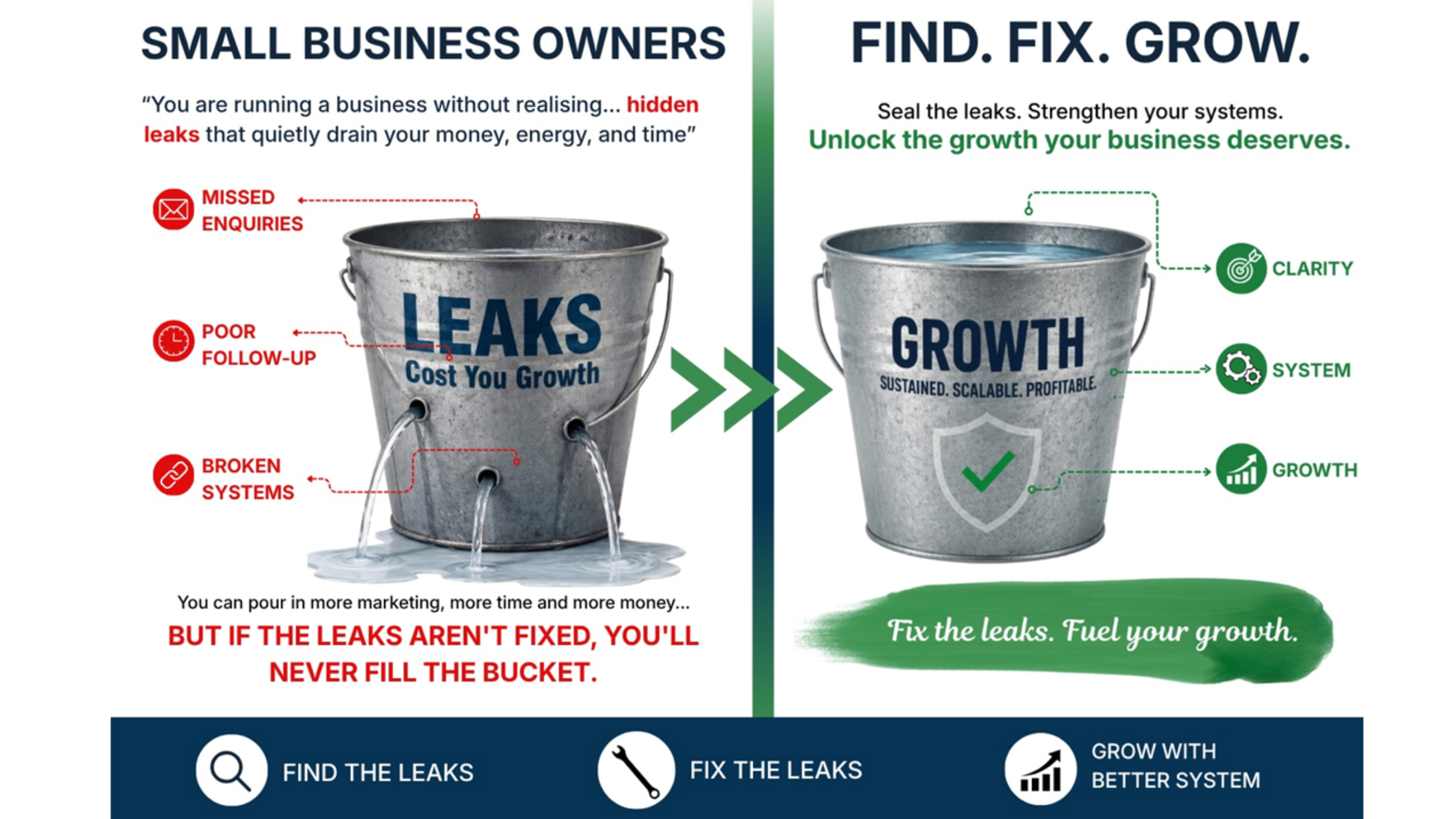
If your leads are not converting into customers, generating even more leads may not solve the real problem.
Look at what happens after the lead arrives.
Are you responding quickly?
Are leads properly qualified?
Are follow-ups being completed?
Are your salespeople prioritising the right opportunities?
Is your customer data connected?
Are stalled deals being identified?
And most importantly:
Does your sales team know what to do next?
Better lead management, lead qualification, sales follow-up, lead scoring and AI sales intelligence can help businesses turn more of their existing opportunities into customers.
Because the goal isn't simply to generate more leads.
The goal is to turn the right leads into revenue.