
The size question: YouTube vs Instagram audience compared
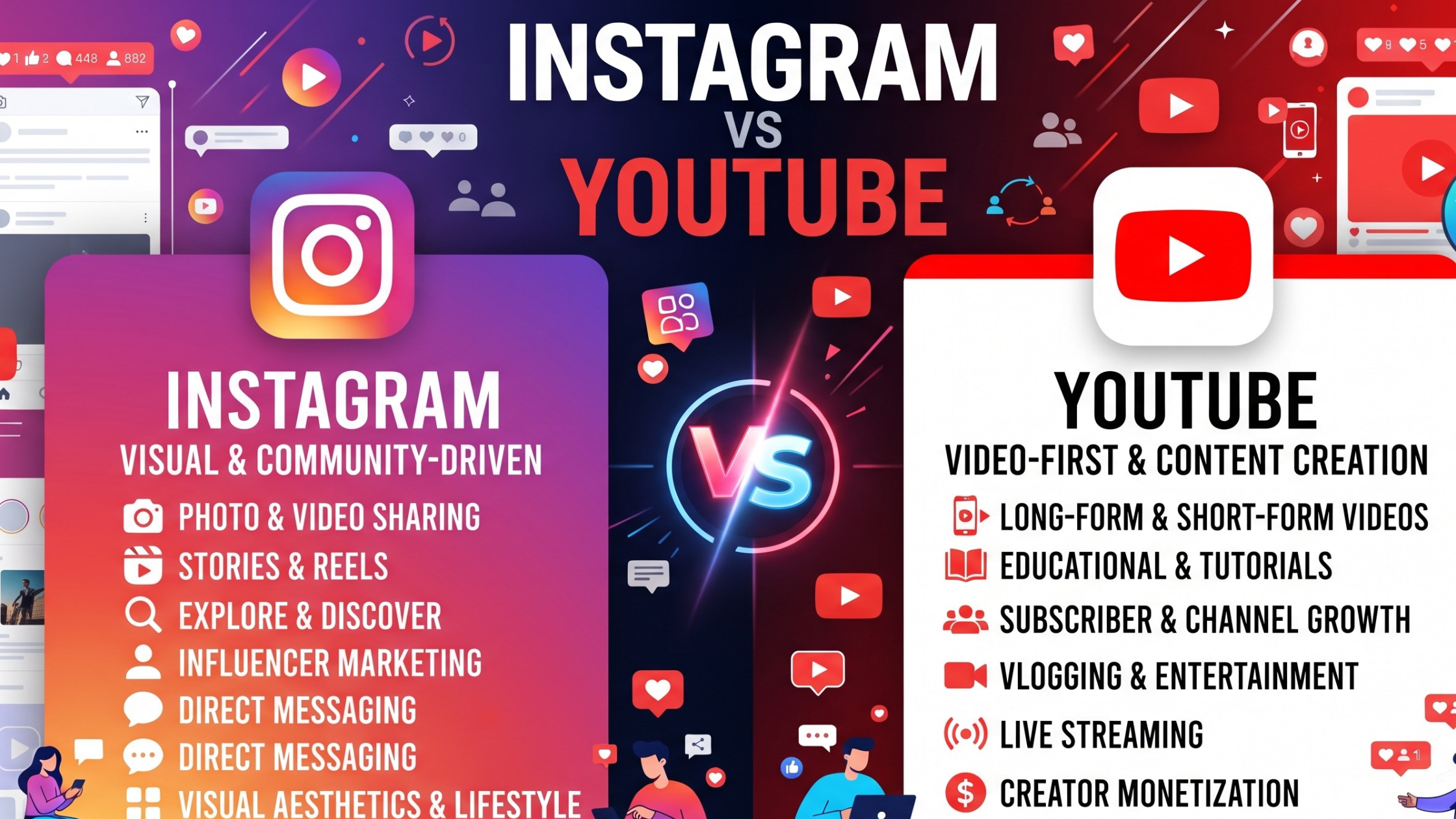
If you're a content creator deciding where to focus your energy, YouTube vs Instagram for creators is one of those questions that sounds simple and turns out to be anything but. Both platforms are enormous. Both can grow a real audience. But they reward completely different kinds of effort — and choosing the wrong one for your goals can mean months of work that never gains traction.
Here's how the two platforms stack up for creators, and how to decide which one actually deserves your time.
The size question: YouTube vs Instagram audience compared
For years, the assumption was that YouTube was the giant and Instagram was the scrappy visual-first upstart. In 2026, that gap has all but closed.
Depending on which analytics firm you trust, YouTube sits somewhere around 2.6–2.85 billion monthly active users, while Instagram lands in the same range — some trackers even put both platforms at or near 3 billion. The numbers wobble because the platforms count differently: YouTube reports signed-in monthly viewers, while Meta reports monthly active users. Cross-platform comparisons always come with an asterisk.
The honest takeaway for creators? On raw audience size, it's effectively a tie. Neither platform is "too small" for you. So size shouldn't be your deciding factor — reach behaviour should.
Reach and discovery: where creators actually get found
This is the part that actually matters when you're choosing between YouTube and Instagram as a creator.
YouTube is a discovery engine. Its recommendation system and search function are built to push your content to people who don't already follow you. A single video can keep pulling in views for months or years after you publish it. YouTube is also the world's second-largest search engine, which means content answering real questions ("how to," "best of," "explained") has a long shelf life. By advertising reach, YouTube is arguably the single largest platform in the world — edging out even Meta's ad network.
Content formats: what each platform rewards creators for
Instagram is an engagement engine. It's built for frequent, visual, in-the-moment content and fast interaction with the audience you already have. The catch for creators: organic reach to your own followers is more capped than it used to be, and content has a much shorter lifespan. A Reel might explode in 48 hours and then vanish. There's less of the slow, compounding "long tail" that YouTube offers.
In short: YouTube tends to win at finding new people over time. Instagram tends to win at keeping existing followers engaged right now.
Content formats: what each platform rewards creators for
The format you enjoy making should weigh heavily in your decision.
YouTube rewards depth. Tutorials, reviews, documentaries, long-form storytelling, and anything searchable thrive here. It's slower to build and more production-heavy, but the payoff compounds — your watch time keeps growing long after you hit publish.
Instagram rewards frequency and aesthetics. Short-form Reels, carousels, and visually striking posts perform best. Each piece is lighter to produce, but you're on a treadmill — you have to keep posting to stay visible, and your engagement rate depends on showing up constantly.
Ask yourself honestly: would you rather make one polished thing a week that keeps working for years, or several quick things a week that keep your audience warm? There's no wrong answer, but there is a wrong answer for you.
Monetisation for creators: predictable vs. flexible income
If income is part of the plan, the two platforms pay creators differently.
YouTube's Partner Programme shares ad revenue directly, which means a back catalogue of videos can generate a fairly predictable, semi-passive income once you're established. It's slower to reach the earning threshold, but far more stable once you're there.
Instagram monetisation leans more on brand deals, affiliate links, and selling your own products, with in-app ad revenue playing a smaller role. It can be lucrative and flexible, but it's less "set and forget" — it depends more on active deal-making and audience trust.
YouTube vs Instagram for creators: how to choose
Instead of asking which platform is bigger, ask which of these sounds like you.
Choose YouTube if you want to:
- Reach people who've never heard of you
- Build evergreen content that keeps working over time
- Rank in search and answer real questions
- Aim for more predictable, semi-passive ad income
Choose Instagram if you want to:
- Build a fast, personal connection with your audience
- Make visual, short-form, frequent content
- Drive brand awareness, shopping, or launches
- Move quickly and stay culturally current
The honest answer: it's often both — eventually
The most successful creators don't really pick one platform forever. They start with the one that fits their strengths and goals, get good at it, and then repurpose that content onto the other. A long-form YouTube video becomes five Instagram Reels. A viral Reel becomes the hook for a deeper YouTube explainer.
But when you're starting out, spreading yourself across both usually means doing neither well. Pick the platform that matches your goal — reach and longevity (YouTube) or engagement and immediacy (Instagram) — and go deep before you go wide.
Frequently asked questions
Is YouTube or Instagram better for creators?
Neither is universally better — it depends on your goal. YouTube is stronger for reaching new audiences and building evergreen, searchable content with predictable ad income. Instagram is stronger for fast engagement, visual short-form content, and brand deals. Match the platform to your goal, not the other way round.
Which platform is easier to grow on as a new creator?
Instagram often shows faster early momentum because Reels can go viral quickly, but that reach fades fast. YouTube grows more slowly at first, then compounds as older videos keep earning views. For quick traction choose Instagram; for long-term, durable growth choose YouTube.
Which pays creators more, YouTube or Instagram?
YouTube typically offers more predictable income through its Partner Programme, which shares ad revenue directly and can become semi-passive once you have a back catalogue. Instagram income leans on brand deals, affiliate links, and product sales, which can pay well but require ongoing active effort.
Does YouTube or Instagram have more users?
As of 2026 they're roughly tied, with both platforms in the 2.6–3 billion monthly active user range depending on the source. YouTube counts signed-in monthly viewers while Meta counts monthly active users, so exact comparisons vary. For creators, audience size is effectively a non-issue on either platform.
Can you be a creator on both YouTube and Instagram?
Yes, and many top creators do — but usually one at a time to start. The common approach is to master one platform first, then repurpose that content onto the other: turning long-form YouTube videos into Reels, or growing a Reel's momentum into a deeper YouTube explainer.